

An effective business leader:
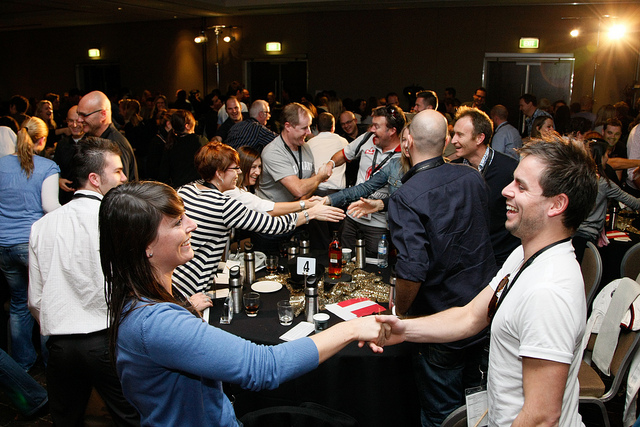
- Creates a thriving community
- Provides opportunities for people to connect
- Inspires through the delivery of quality, unique and purpose driven events
- Rewards effort and achievement.
The first step in organising events must be to define the objectives, followed by setting clear and measureable goals and understanding how the return on investment (ROI) will be calculated.
Consider these points:
- The event objective – is it to generate new leads/sales, launch a product, build client or staff relationships, resolve issues or connect, inspire, educate and reward your team
- How will the ROI be measured? By the number of people who attend, change in perceptions, increase sales, education, solutions to current problems, reward high achievers
- Think about the broader marketing opportunities to connect with your audience in pre & post event communications – a sound communications plan can extend benefits well past the conclusion of the event
- Design an authentically engaging guest experience. What is their take away message? Is it in line with your company values?
- Consider any risks or issues which may arise
- What does a successful outcome look like?
The Event Management Process
After considering the vision, objectives, company values, and event history, the event manager will proceed with confidence in developing a framework that will align with the overall business strategy. Steps to achieve this are:
- Establish a clear program outline to meet the business objectives as well as the individuals’ growth & development
- Consider suitable destinations, venues and ancillary suppliers
- Develop innovative strategies to move forward from the way it has always been done.
- Negotiate value for spend with all suppliers, not just in price but in event delivery including terms & conditions
- Create suitable business sessions to ensure audience engagement
- Consider the social aspects of the program and how the audience will respond.
- Present ways to represent the brand and encourage commitment
- Design effective communications, pre during and post event
- Design innovative AV & technical production
- Develop a balanced event agenda, incorporating business/product content, learning opportunities, team activities and social occasions
- Create a high-impact reward and recognition strategy
- Construct sponsorship engagement and networking opportunities
- Develop and manage financial and project reporting
- Ensure adequate staff numbers are on site to host & assist guests during the event
- Conduct production meetings and rehearsals to ensure all stakeholders understand the requirements and nothing is missed
- Maintain technologically sound reporting systems.
An experienced event manager will work in partnership with clients to expedite all of the above and deliver a successful and memorable event. They will ensure objectives are met and the ROI is achieved. By using their negotiation skills, existing buying power and robust systems, the event manager should be able to make significant savings whilst achieving a superior outcome.
For more information please contact Ruth Hirst at Synergy Events on +61 2 9977 5546.
I look forward to hearing from you.